Field log by Lucia Herrera, Galapagos and Amazon naturalist with our studio since 2017. River hours and prices checked for the 2026 season.
Why this route
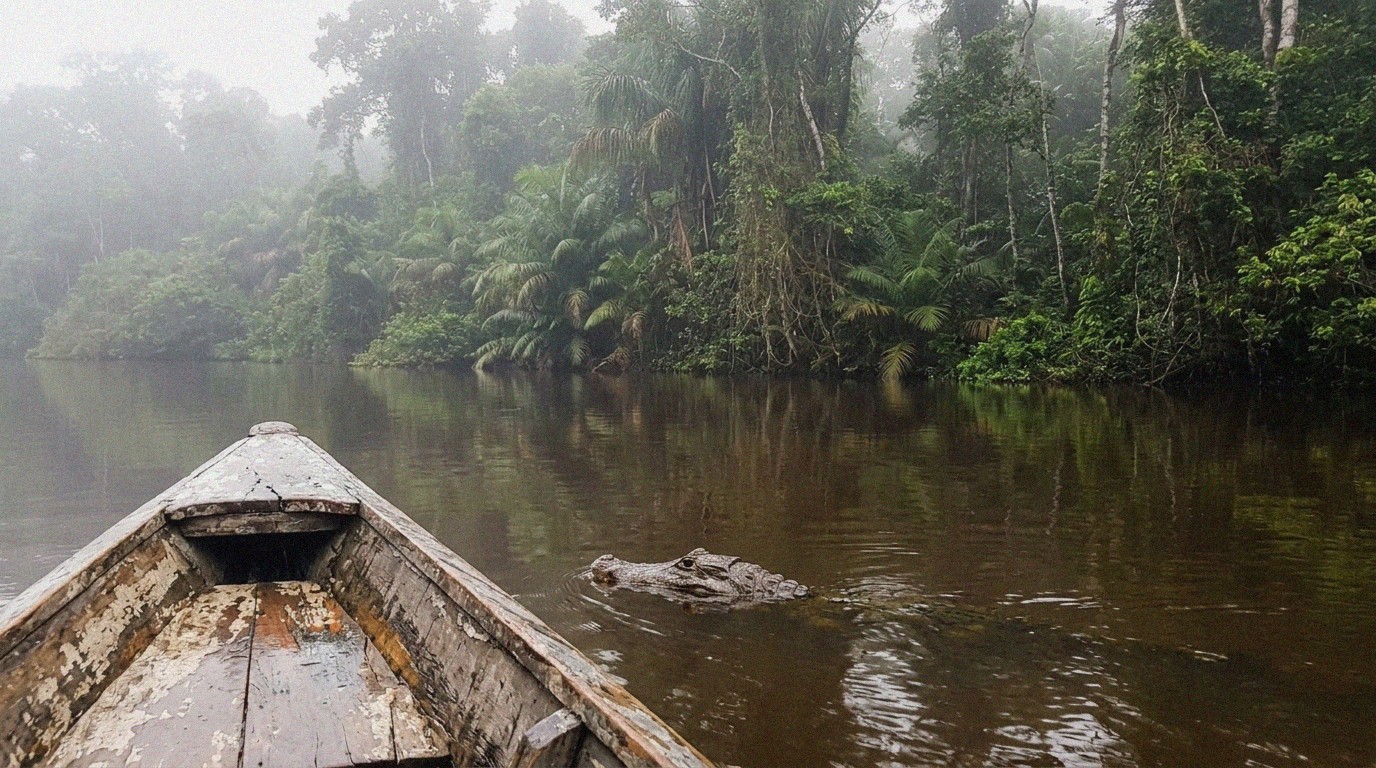
Cuyabeno suits first-time Amazon travelers because the flooded forest concentrates wildlife along 2 m of navigable water: pink river dolphins, hoatzins, five macaw species, and caimans visible from the canoe without jungle trekking. In 2026 a 4-day lodge program lists at 380 to 520 USD per person, covering the Lago Agrio transfers, all meals, a naturalist guide, rubber boots to size 46, and the 20 USD reserve fee. The reserve sits 100 km east of Lago Agrio town, reached by a 2-hour motorized canoe, and lodges run on solar power with screens, not glass, between you and the night sounds. Rain falls year-round, 3,000 mm annually, so there is no dry season to wait for, only wetter weeks in April and May.
We route Quito clients on the morning 50-minute flight to Lago Agrio, 90 to 130 USD return in 2026, because the 8-hour bus burns the first day. Groups run 8 to 10 guests per guide, and the daily pattern is fixed: dawn birding by paddle canoe, midday rest through the heat, afternoon motorized excursion, and a night walk or caiman search after dinner. What surprises most travelers is the quiet: electric motors on the small canoes, whisper protocol after 18:00, and wildlife at 10 m distance. Four days gives three full activity cycles, which is the minimum for a fair chance at dolphins, anaconda signs, and the giant ceiba trees.
The log: Lago Agrio to the flooded forest
Five dated entries from the flight east to the return. Paddle hours and sightings logged daily.
Day 1 - Flight east and the canoe in
We meet the 09:00 Quito flight at Lago Agrio by 10:00, lunch in town at 8 USD, and drive 100 km to the Cuyabeno bridge in two hours. The motorized canoe covers the final 2 hours downriver, arriving at the lodge near 16:00 with parrots crossing overhead. Evening is rubber-boot fitting, a 30-minute swim call in the lagoon, and dinner at 19:00. The 20:00 night walk runs 90 minutes: tree frogs, sleeping birds, and scorpion fluorescence under UV light.
Day 2 - Flooded forest and dolphins
Dawn paddle at 05:45, two hours by silent canoe through the flooded forest as hoatzins, parrots, and herons wake along 4 km of channel. Midday rest runs 11:00 to 14:30 through the heat, 32 C, with hammocks and the swimming lagoon. Afternoon is the 3-hour motorized run to the dolphin pools, where pink river dolphins surface at 20 to 50 m, best watched in silence. Evening brings the caiman search by spotlight: eyeshine counts often pass 30 individuals in an hour.
Day 3 - Canopy, ceiba, and community
Morning is the 400 m canopy walkway at 30 m height, 90 minutes, with toucans and oropendolas at eye level. Midday we visit the giant ceiba, 50 m tall and 300 years old, a 2 km trail loop with the guide reading tracks: ocelot prints this week. Afternoon is the community visit, 2 hours, where the preparation of yuca bread and the blowgun demonstration are hosted by resident families, with 10 USD craft purchases going directly to makers. Evening is piranha fishing from the canoe, catch and release, dinner at 19:30.
Day 4 - Dawn birds and the river out
Final dawn paddle at 05:45 for 90 minutes, focused on the five macaw species as pairs commute overhead at 100 m. Midday is breakfast, packing, and the 2-hour motorized return to the bridge by 11:00, then the drive to Lago Agrio for lunch. The afternoon flight lands in Quito near 16:00, and our driver transfers you to the hotel. Total program cost in 2026: 380 to 520 USD plus the flight, with roughly 12 hours of guided activity across the four days.
Day 5 - Quito buffer and debrief
We keep a buffer morning in Quito for delayed river exits, which happen about one trip in twenty in the wettest weeks. Midday is a debrief coffee with our Quito desk, photo review, and the feedback form. Afternoon is free in the old town or the middle-of-the-world site, 25 km north, entry 5 USD. Evening connections onward carry no Amazon risk after this buffer.
If you go
Amazon packing is counterintuitive. The notes below reflect what actually gets used in 2026.
- Fly to Lago Agrio at 90 to 130 USD return; the 8-hour bus option costs a full day for 25 USD saved.
- Pack quick-dry long sleeves, a headlamp with red mode, and binoculars; lodges supply boots and ponchos.
- Budget 380 to 520 USD for the 4-day program plus 20 USD reserve fee, tips of 10 USD per day for the team.
- Carry small USD bills: craft purchases and town lunches run cash-only outside the lodges.
- Accept the rain: 3,000 mm a year means afternoon showers in any month, and wildlife shows anyway.
- Keep one buffer night in Quito after return; wet-season river levels delay roughly one exit in twenty.
We open with a walk-through call, match you to a lodge by group size and month, arrange the flights and transfers, and brief you in Quito. Our Quito line follows every canoe movement daily.